Judging quality
Stem segments show a five-fold star in cross-section. On plates, judge how much of the crown is exposed and whether the arms are original or sculpted.
Fossil
Sea lilies — stalked echinoderms that carpeted Palaeozoic sea beds. Most material is disarticulated stem segments in limestone; complete crowns with the feeding arms intact are dramatically rarer and prepared over many hours.
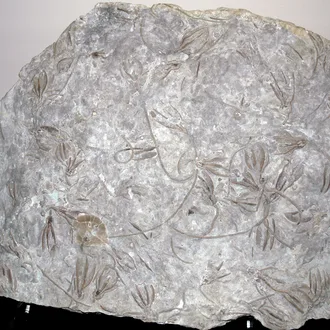
Stem segments show a five-fold star in cross-section. On plates, judge how much of the crown is exposed and whether the arms are original or sculpted.
Calcite is soft and acid-sensitive. Keep from vinegar, citrus and ultrasonics.
In English folklore, crinoid stem discs were 'St Cuthbert's beads' and were strung as rosaries along the Northumbrian coast.
Cultural history, recorded as tradition rather than as medical or scientific claim.
See it in person
Both rooms are open six days a week, and there is always someone happy to pull pieces out of the case so you can compare them under the light.