Judging quality
Look for sharp crystal faces and electric blue depth. Azurite in matrix with malachite is more stable and more interesting than loose crumbly material.
Carbonate
Intense blue copper carbonate, frequently intergrown with green malachite into which it slowly alters over geological time.
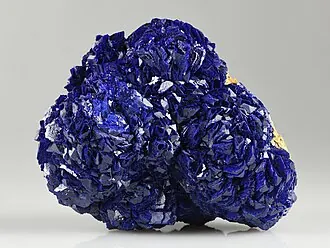
Look for sharp crystal faces and electric blue depth. Azurite in matrix with malachite is more stable and more interesting than loose crumbly material.
Soft, light-sensitive and acid-sensitive. Display away from direct sun; never wash.
Azurite was the standard blue pigment of medieval European painting before ultramarine, and many old paintings have greened as it converted to malachite.
Cultural history, recorded as tradition rather than as medical or scientific claim.
See it in person
Both rooms are open six days a week, and there is always someone happy to pull pieces out of the case so you can compare them under the light.