Judging quality
For specimens, look for lustrous tetrahedral crystals with sharp edges, ideally on matrix with quartz or dolomite. Gem material must be clean and orange-red.
Sulfide
Zinc sulfide with a dispersion three times higher than diamond, which makes cut honey-colored Spanish sphalerite one of the most fiery gemstones that exists.
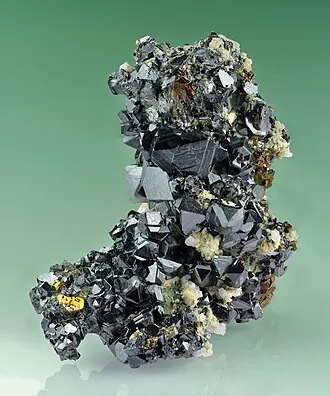
For specimens, look for lustrous tetrahedral crystals with sharp edges, ideally on matrix with quartz or dolomite. Gem material must be clean and orange-red.
Soft with perfect cleavage in six directions — extremely difficult to cut and easy to damage.
Sphalerite is the world's principal ore of zinc, and its name comes from Greek for 'treacherous', because miners mistook it for galena.
Cultural history, recorded as tradition rather than as medical or scientific claim.
See it in person
Both rooms are open six days a week, and there is always someone happy to pull pieces out of the case so you can compare them under the light.