Chalcedony

Chalcedony

Microcrystalline quartz without banding — the parent material of agate, carnelian and jasper. The Turkish and Namibian blue-grey material has a milky glow like frozen smoke.
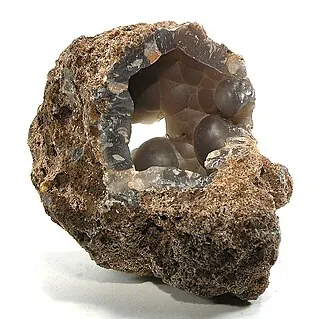
Chalcedony — mineral specimen
Reference photograph: Robert M. Lavinsky, CC BY-SA 3.0 · source. Specimens in the shop vary.

Judging quality

Waxy lustre, slight translucency, no visible crystals even under a loupe. Even color distinguishes it from banded agate.

Care

Hard and undemanding. Water and soap.

History & lore

Chalcedony seals and intaglios survive in quantity from Mesopotamia onward, prized because they carve cleanly and release wax without sticking.

Cultural history, recorded as tradition rather than as medical or scientific claim.

Common questions about Chalcedony

What is Chalcedony?
Microcrystalline quartz without banding — the parent material of agate, carnelian and jasper. The Turkish and Namibian blue-grey material has a milky glow like frozen smoke.
How hard is Chalcedony and what is it made of?
Chalcedony is a Chalcedony-family mineral with the composition SiO2. It crystallizes in the trigonal system and rates 6.5-7 on the Mohs hardness scale. It occurs in blue, white, grey, lavender.
Where does Chalcedony come from?
Notable localities for Chalcedony include Turkey, Namibia, Indonesia, Oregon, USA.
How do you tell good Chalcedony from filler?
Waxy lustre, slight translucency, no visible crystals even under a loupe. Even color distinguishes it from banded agate.
How do you care for Chalcedony?
Hard and undemanding. Water and soap.

See it in person

Photographs only go so far

Both rooms are open six days a week, and there is always someone happy to pull pieces out of the case so you can compare them under the light.

Plan a visit
Share Chalcedony