Judging quality
Nacre quality is judged by orient — the soft interference glow beneath the surface — not just by shine. Real pearls feel gritty tooth-tested; imitations are glassy smooth.
Organic
Concentric nacre laid down by a mollusc around an irritant. Almost all pearls on the market are cultured; natural pearls are rare enough to be an auction category of their own.
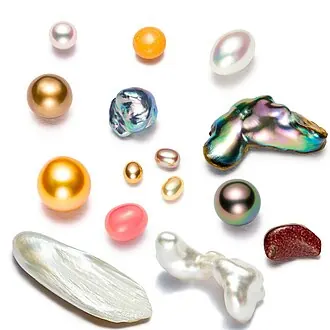
Nacre quality is judged by orient — the soft interference glow beneath the surface — not just by shine. Real pearls feel gritty tooth-tested; imitations are glassy smooth.
Last on, first off. Perfume, hairspray and sweat all etch nacre. Wipe after wearing.
Pearls were the most valuable gem of the ancient Mediterranean, and Roman sumptuary law tried repeatedly and unsuccessfully to restrict who could wear them.
Cultural history, recorded as tradition rather than as medical or scientific claim.
See it in person
Both rooms are open six days a week, and there is always someone happy to pull pieces out of the case so you can compare them under the light.