Borate

Howlite

Chalky white borate with grey webbing, porous enough to take dye perfectly — which is why most fake turquoise on the market is dyed howlite.
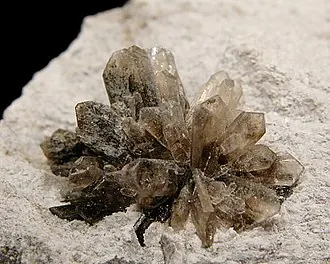
Howlite — mineral specimen
Reference photograph: Ronnie Van Dommelen, CC-BY-SA-3.0 · source. Specimens in the shop vary.

Judging quality

Natural howlite is white with grey-black veining. If a 'turquoise' bead is light, chalky and shows dye concentrated in the veins, it is howlite.

Care

Soft and porous. Keep away from oils and colorants.

History & lore

Discovered in 1868 by Henry How, a Nova Scotian chemist investigating a gypsum quarry.

Cultural history, recorded as tradition rather than as medical or scientific claim.

Common questions about Howlite

What is Howlite?
Chalky white borate with grey webbing, porous enough to take dye perfectly — which is why most fake turquoise on the market is dyed howlite.
How hard is Howlite and what is it made of?
Howlite is a Borate-family mineral with the composition Ca2B5SiO9(OH)5. It crystallizes in the monoclinic system and rates 3.5 on the Mohs hardness scale. It occurs in white, grey.
Where does Howlite come from?
Notable localities for Howlite include Canada (Nova Scotia), USA (California).
How do you tell good Howlite from filler?
Natural howlite is white with grey-black veining. If a 'turquoise' bead is light, chalky and shows dye concentrated in the veins, it is howlite.
How do you care for Howlite?
Soft and porous. Keep away from oils and colorants.

See it in person

Photographs only go so far

Both rooms are open six days a week, and there is always someone happy to pull pieces out of the case so you can compare them under the light.

Plan a visit
Share Howlite