Zeolite-associated

Gyrolite

Pale spherical aggregates with a concentric internal structure, usually nested among green apophyllite and white stilbite in Indian basalt cavities.
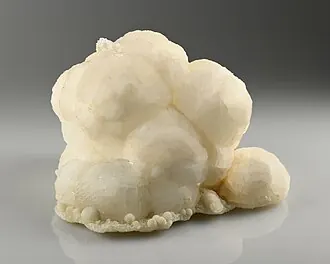
Gyrolite — mineral specimen
Reference photograph: Wikimedia Commons · source. Specimens in the shop vary.

Judging quality

Balls are smoother and denser than okenite's fibre puffs, and split to show layered concentric shells.

Care

Soft; handle by matrix, no water.

History & lore

First described from the Isle of Skye in 1851.

Cultural history, recorded as tradition rather than as medical or scientific claim.

Common questions about Gyrolite

What is Gyrolite?
Pale spherical aggregates with a concentric internal structure, usually nested among green apophyllite and white stilbite in Indian basalt cavities.
How hard is Gyrolite and what is it made of?
Gyrolite is a Zeolite-associated-family mineral with the composition NaCa16Si23AlO60(OH)8·14H2O. It crystallizes in the trigonal system and rates 3-4 on the Mohs hardness scale. It occurs in white, cream, apple green.
Where does Gyrolite come from?
Notable localities for Gyrolite include Maharashtra, India, Iceland, Northern Ireland.
How do you tell good Gyrolite from filler?
Balls are smoother and denser than okenite's fibre puffs, and split to show layered concentric shells.
How do you care for Gyrolite?
Soft; handle by matrix, no water.

See it in person

Photographs only go so far

Both rooms are open six days a week, and there is always someone happy to pull pieces out of the case so you can compare them under the light.

Plan a visit
Share Gyrolite